Thursday, August 5, 2010

Let's Throw The POTUS Under The Bus!

That's a horrible picture, B.D.! I know.Years ago, I came across a book that caused me to laugh out loud as well as piqued my curiosity. And that's a tall order. It was the unexpected title that tickled my funny bone, and, when coupled with the cover design, the tickling went all the way down to the bone marrow.

You've got to love the title: Flattened Fauna: A Field Guide to Common Animals of Roads, Streets, and Highways. You can see the cover design here.

On another blog I frequent, the talk is all about those unfortunates that President Obama supposedly threw under the bus during his run-up to the presidency and beyond. I got to thinking about that rather bizarre metaphor. What is the origin of the phrase that has as one of its meanings, according to the Urban Dictionary: to sacrifice some other person, usually one who is undeserving or at least vulnerable, to make personal gain?

When Rev. Wright was all the buzz, and Fox News aired without let up a video snippet that caught the Reverend excoriating the nation, one Newsweek writer took a stab at tracing both its meaning and its origin. This was after then candidate Obama appeared to distance himself from Wright, and was summarily accused of the unpardonable sin of "throwing the Good Reverend under the bus."

"From the tar pits of the blogosphere to the peaks of the mainstream media, one strange phrase has bubbled up in the wake of Sen. Barack Obama's sweeping speech on race in America: "He didn't throw him under the bus." The "him" is, of course, the Rev. Jeremiah Wright Jr., Obama's former pastor, whose angry and racially charged sermons have sparked controversy that could undercut Obama's presidential candidacy. But the metaphor—"throw him under the bus"—is tougher to explain. Where did it come from? Why is it suddenly ubiquitous? And at the risk of sounding overly sensitive, is it even advisable, given its ugly echo with the "back of the bus" legacy of African-Americans?" [1]

Speaking of back of the bus, I've waited a long time for this nation to elect a black man, or a black woman, as president (Shirley Chisholm being the first black woman to attempt it.).

So I'm not as willing as some to throw this nation's first black president under the bus, the way that some blacks believe he has done to others. It was the image of the president as roadkill that brought the aforementioned book to mind, an image that I didn't long indulge, but others might.

If I might transmigrate a post from another blog and my response, you'll get the flavor of what I mean. I won't identify the author of the post to which I responded. That would serve no purpose.

Commenter: "No matter how much slack you want to give him he [Barack Obama] did raise expectations. And you are right he is not Jesus but he also has no intention nor has he had any intentions on solving the problems of the little person, or the problems of homelessness, the over incarceration of black folks, ending the dirty dealings that caused folks to be foreclosed upon, getting all children educated, stopping US government aggression, or any other progressive forward thinking idea that one may come up with."

My Response: A strong indictment. Putting education aside, which of the other concerns you cited were part and parcel of Obama's pledge to America, black or white?

Here's what I recall. He would end the war in Iraq--our combat mission there. As of this month, he's on target.

He would expand the war in Afghanistan--the real epicenter for our war on terror, as he saw it, during his campaign.

Congress under his guidance did in recent weeks pass a financial reform bill into law. It didn't go far enough for me, but I'm not complaining--but it just might have sufficient provisions and muscle to do what you hope: to end what you call "the dirty dealings that caused folks to be foreclosed upon."

Expectations aren't campaign pledges.

And with those pledges (candidate Obama didn't promise us the moon), blacks voted for him overwhelmingly, and whites in sufficient numbers to seal a win.

With a little more time and a willing congress (Obama hasn't been in office two years yet), I think he'll get around to rehabilitating our faltering educational system, and addressing other progressive concerns.

America's homeless crisis can be taken up locally, and by charitable institutions. Many such institutions are doing remarkable work to provide homes for the chronically homeless, and well as for those recently homeless as a result of foreclosures.

Check around: You may have such an institution in your own city that you can partner with. End of Response

We've all heard the usual responses to these complaints: Obama's not God, or Jesus. He can't walk on water. He can't perform miracles. Yet, a growing number of the disenchanted are calling precisely for him to be just that--God, or Jesus--and to part the Red Sea, for the deliverance of blacks from the hated Pharaohs of Egypt, and to lead them to the Promised Land.

Although I questioned the advisability of Obama continuing the war in Afghanistan, I only wanted him to fulfill just one of his campaign promises: to end the war in Iraq. Anything else was icing on the cake.

Therefore, I'm amazed that some blacks actually voted for Obama with the hope that he'd address all the wrongs that blacks have been subjected to since the formation of this country.

"Obama listens to whites," they complain. "He listens to their concerns, as well as the concerns of other special interests, but he has no special interest in blacks."

Regrettably, we're not a race-neutral society. As a result, Affirmative action came under fire because it was seen as advancing one race at the expense of another. It didn't matter that Affirmative Action sought to remedy years of white advancement at the expense of blacks. Paradoxically, this program benefited more than just blacks, although not all these non-black groups that benefited suffered equally, or to the same degree as blacks.

If President Obama targeted blacks specifically to reduce the double-digit unemployment rate that haunts blacks, or the inner city for redevelopment, the political heat and fallout that would ensue for his administration would be enormous. It would be seen as a severe blow to the entire Democrat Party--a wound, it seems certain, he wouldn't have the party bear. Already the criticism of black preferential treatment is rampant--health-care reform, for example, has been described as a kind of black reparations.

A white president, if he targeted blacks, wouldn't have to brook this kind of political blowback with the same virulent, racial animus that would greet an Obama effort, although a similar measure may meet with the same resistance, and certain defeat.

Already there's talk from the Obama administration that 75 percent of the oil spilled into the Gulf has dissipated or has been dispersed. This claim, coming in advance of the November 2010 elections, places the Obama administration at risk, if later this claim is found not to be true, but such a claim takes the Democrat Party off the hook, and increases Democrats chances in the upcoming Fall election. So it's not surprising to see the administration risking so much to keep the party viable. As they see it, and despite claims to the contrary, no one person, group, segment of society, or special interest, are more important than the party, and it ongoing survival, and viability.

Criticize the president, sure, but let it be honest and effective criticism, criticism backed up with e-mails, letters, petitions, and any other vocal or written means at your disposal to bring your issues to the attention of the president and congress. Complaining without making an effort to effect a remedy may be cathartic, but, in the end, it's merely a useless exercise.

In response to another commenter, I had this to say:

If the [news] media is the fourth branch of government, then the people, at the very least, are the fifth branch.

Rather than sitting back and watching things being done to us, we should shoulder our responsibility in the governmental equation, and, as citizens, step up and do our part to round out the equation--to make government responsive and accountable to the people.

Anything short of that is nothing more than sounding brass and tinkling cymbals.


End of response.

Preview of coming attractions: a multipart examination of what's needed to create a black economy, and, at the same time, develop the black community.

[1] ‘Under the Bus’
Add to Rev. Wright's legacy this suddenly inescapable phrase.

Thursday, July 15, 2010

The Defacing of an American President

The Defacing of an American President.There's more than one way to deface the image of a president. It can be done with spray paint, with words, and thorough the use of an assortment of negative images.

It's not enough to do it once. To have a lasting impact, it's important that it's done, over time, again and again--the way that time, rain, and wind, together, can wear down almost any structure that stands in their way.

For our president, that wearing-down, destructive force of time, rain, and wind, has come in the form of the Tea Party Movement. Recently an organization has come to the president's defense--one other than MSNBC, and liberal radio personalities. In an uncharacteristic move, the National Association for the Advancement of Colored People (NAACP), apparently fed up with the Tea Party's racist assaults upon this nation's first black president, has backed a resolution to "curb its enthusiasm:"

Tea Party members have used "racial epithets," have verbally abused black members of Congress and threatened them, and protesters have engaged in "explicitly racist behavior" and "displayed signs and posters intended to degrade people of color generally and President Barack Obama specifically," according to the proposed resolution.

"We're deeply concerned about elements that are trying to move the country back, trying to reverse progress that we've made," NAACP spokeswoman Leila McDowell told ABC News. "We are asking that the law-abiding members of the Tea Party repudiate those racist elements, that they recognize the historic and present racist elements that are within the Tea Party movement."

The National Association for the Advancement of Colored People, in coordination with 170 other groups, including labor unions, is planning a protest march in Washington, D.C., Oct. 2 as the next step in building momentum against the Tea Party.

The "One Nation" march is designed as an antithesis to the Tea Party, and it's about "pulling America together and back to work," McDowell said.
More here

Now that the resolution has been adopted by those attending the NAACP's annual convention, it was not surprising that the Tea Party leadership, and other supporters, Fox News for one (no surprises there), are condemning the NAACP for their stance, and for calling for the Tea Party to repudiate those racist elements in its midst.

I applaud the NAACP for the resolution. Other groups should follow its example, and insist that the Tea Party distance itself from this kind of racist behavior by calling it out, and condemning it.

But that won't be happening, and here is why:

The wave of public acclaim that swept Obama into the White House had to be met with a force equal to, or greater than, lest he and Democrats for the next five national elections continue to ride high in the hearts and minds of the American people.

This offense to the Republican party, and conservatism, could not stand, and would not stand.

Liberalism was a bigger threat to the sanctity of the American Way, the Holy Grail of the U.S. Constitution, and the honored memory of our Sainted Forefathers who fashioned this document to govern the affairs of men--than al-Qaeda, the Iranians and their persistent effort to enrich uranium to build nuclear bombs with which to destroy us and Israel.

This threat wasn't lost on Rush Limbaugh. His was the first shot across the bow of Obama's freshly formed "regime," which was soon picked up in sundry incarnations:

"I want him to fail."

Sensing that the Republican party had played too nicey-nicey, allowing the liberal (now socialist) takeover of the presidency and the congress, the Tea Party Movement (more edgy, and more conservative than the mainstream) was given birth.

They in the movement had one goal: Topple Obama.

If he was seen as an icon (Shatter his image!). If he was a unifier (Brand him a racist!). If he galvanized a crowd with words alone (Call him the anti-Christ!).

For months now the destruction of a president and his party has been well under way, the assaults occurring daily--here a little, and there a little, a chipping here and a whittling there.

And the method has been sinister, a Machiavellian plot that Machiavelli himself would have endorsed, and would have been proud to call his own.

The opposition party resorted to several tactics, using a stratagem that would be the envy of Tricky Dick, were he alive, and will, over time, be inducted into the Hall of Fame of Dirty Tricks

The method was simplicity itself: The Tea Party Goers would, until the next national election, put all their collective energies toward the following: the radicalization, the Islamization, the socialismization, the Hitlerization, the blackenization, the racialization, the foreignization*, of Obama.

It didn't matter that, by associating Obama with Hitler and the holocaust, that it marginalized both--the horror that emerged as concentration camps, and the mass extermination of Jews, and the evil that was Hitler and the Nazi Party.

Predictions have it, from the White House Press Secretary himself, Robert Gibbs, that the Fall elections could result in a hand over of the keys to the U.S. House of Representatives to Republicans.

Although I, for one, am not certain of the outcome of the election for the House or the Senate come this Fall, I have never underestimated the power of bad press, and its destructive potential, especially when those who would wield it, wield it unscrupulously, and with deadly intentions.

A late but timely revision to this blog entry, thanks to "Blinders Off". If you watch only one You Tube video this week, this is it: "What if the Tea Party was Black"? Who says our young people aren't paying attention.


*Some words created just for this blog entry.

Monday, July 12, 2010

L.S./M.F.T.

Luck Strike Means Find TobaccoSome of our nation's young people still act as though it will take immeasurably longer for their brain's development to catch up with their over-all physical development, than others in their peer group.

It's as though we have spoiled six-year olds inhabiting adult bodies, but, unlike six-year olds who're physically limited, these mental juveniles can plan, organize, and otherwise use their adult cunning to challenge cops, damage and destroy public and private property--all the while giving the proverbial finger to parents, whom, I trust, would disapprove of this type of behavior, and a protruding tongue to the quality of their rearing, or lack thereof.

Having reached the limits of their prodigious patience, some cities are preparing to fight back:

PHILADELPHIA — It started innocently enough seven years ago as an act of performance art where people linked through social-networking Web sites and text messaging suddenly gathered on the streets for impromptu pillow fights in New York, group disco routines in London, and even a huge snowball fight in Washington.

Flash MobBut these so-called flash mobs have taken a more aggressive and raucous turn here as hundreds of teenagers have been converging downtown for a ritual that is part bullying, part running of the bulls: sprinting down the block, the teenagers sometimes pause to brawl with one another, assault pedestrians or vandalize property.

On Wednesday, the police here said that they had had enough. They announced plans to step up enforcement of a curfew already on the books, and to tighten it if there is another incident.

They added that they planned to hold parents legally responsible for their children’s actions. They are also considering making free transit passes for students invalid after 4 p.m., instead of 7 p.m., to limit teenagers’ ability to ride downtown.


Lucky Strike, now more often referred to as "Luckies," introduced a message on its cigarette packs in 1917.

It was: L.S.M.F.T. (Luck Strike Means Fine Tobacco).

Now what does all this, a brand of cigarettes, "Luckies," have to do with the topic at hand. Well, not much.

Just this: A book I read years ago said that Lucky Strike's popular message could be used as a mnemonic device to remember something more important than a cigarette message; the initials of the message representing something infinitely more valuable--a key to understanding human behavior, and a reminder of a methodology that would allow one to respond in a way that could defuse a human interaction gone awry.

It is this: Low Self-esteem Means Friction and Trouble (L.S.M.F.T).

This little bit of knowledge has served me well over the years, and have extricated me from some rather sticky situations that could have spiraled out of control, but for it.

For all the laboriously slow methods available to us to win fame and success (college, starting a business), we seem to be living now in an era of instant gratification. And, too, quite aptly, we have been called the "throw away society," and that, too, may also be true. We, as a society, it seems, don't value anything as much as we used to.

Now we want things quickly without resorting to the tried and true methods of the past--hard work, elbow grease, true grit, or moxie.

For better or for worse, we're living during a time, thanks to the Internet, and a twenty-four hour news cycle, and cameras and cellphones everywhere, as ubiquitous as portable transistor radios used to be, where the average Joe or Jane can now become a celebrity over night.

Consider the 'Barefoot bandit' with a cult following on Facebook of around 60,000 fans, and a reputation rivaling that of Bonnie and Clyde, and the sudden success and fame of a homeless man caught on camera folding an American flag, military style, that had come unmoored from it's mooring during a storm.

Now captured in the Bahamas, there's talk of the existence of a possible movie deal for the "Barefoot bandit," and most likely a book deal, as well, and that the homeless man is receiving job offers, and other outpouring of largesse from grateful strangers around our usually jaded nation that were moved by his uncommon display of patriotism.

Reality T.V. shows, often featuring the common man and common woman, who, in past years, would have been dubbed "Everyman," can now garner a following to equal that of movie stars.

Jon & Kate Plus 8 is one of those shows, that, at its peak, attracted as many as 9.8 million viewers.

With all this allurement of instant fame and monetary success just a video away, or a Reality T.V. show away, or a foolish stunt away, or an eluding of the cops away--who needs to work hard, study hard, and sacrifice time, and energy to bring one's self-esteem up, and launch it into the stratosphere of public acclaim, and monetary rewards.

Instead, all that is now needed is luck, a gimmick, and a good agent.

Wednesday, July 7, 2010

TrUSt?

Spies Among UsOur latest spy caper, now all the rave--comprised of ten Russian citizens--is not your usual cloak and dagger escapade.

It's certainly all of these--invisible ink, secret code words, fake names--and it's also this: quiet family time in the burb, hot dogs and hamburgers on the grill, and other concessions to American culture to allow these Russian spies to blend in. One person has described one husband-wife team as a "nice couple."

That's us: "Nice."

"'They’re such a nice couple,' Susan Coke, a real estate agent who sold a home in Montclair, N.J. to two of the suspects — who called themselves Richard and Cynthia Murphy — told The New Jersey Star-Ledger. 'I just hope the FBI got it wrong.'

"Prosecutors say that for the past decade the alleged Russian spies, while passing as everyday people in suburbia and elsewhere, engaged in secret global travel with false passports, secret code words, fake names, invisible ink and encrypted radio messages."
More here.

What does these arrests on espionage charges say about governments' ability to forge understandings--treaties, and other international agreements--when they don't trust each other?

And if governments don't trust each other, what does that say to a people who place their trust in governments so that they may have their common defense, and their common welfare secured?

I say: Take your lead from governments around the world. These governments are actively engaged in knowing what the other is about using surreptitious means, if necessary, to do so.

We don't have to go that far, however, but it behooves a people to use whatever democratic means that are at their disposal to maintain those checks and balances to which the founding fathers were so partial.

And staying informed--our becoming a knowledgeable electorate--should be an indispensable part of holding governments accountable. If the Russian government is willing to go to such great pain, to such amazing lengths, as to insert spies in our midst to stay informed about our government's intentions, and to gather sensitive information, how much more us, the people, the one's who'll suffer the most for government's missteps.

Wikileaks is one of those organizations that is on the frontline of that information gathering, and a young Army private, one Bradley Manning, faces "an Article 32 Hearing, which is similar to a grand jury" because of an alleged leak to Wikileaks which it promptly brought before the American people.

The U.S. has formally pressed criminal charges against Army Private Bradley Manning for allegedly leaking secret military files to Wikileaks, including the hugely controversial video of U.S. helicopters killing civilians in Iraq. Manning faces several charges, including espionage, that could carry a sentence of up to 52 years in prison. These charges, however, raise more than they resolve about the complicated case. Here's what we still don't know.

Private Manning charged with disclosing iraq-slaughter video. Trigger happy Apache crew remain uncharged.
More here.

How far the people should be willing to go to gather information on government activities, and coverups, will always be debatable, but what is not debatable is the role of the people: We the people should be the final arbiters, the ultimate checks and balances to counter the potential tyranny that's always inherent in power, and within the confines of government, because of the power that it wields in our names.

Be certain of one thing: Government will not always work in the best interest of the people it claims to serve. It will always exercise power that's not in the interest of the people--from illegal wiretaps, to a financial reform bill that still leaves the country exposed to rapacious Wall Street bankers, to a laxity of regulatory policing of Big Oil (to name a few), who will still seek to drill in environmentally sensitive areas, without appropriate safeguards, or the means to respond responsibly, and adequately, to catastrophes when they occur.

And they will surely occur.

Just as other countries spend millions watching what other governments are doing that may be inimical to their welfare, it behooves us to do the same with equal enthusiasm.

The news media is often seen as the fourth branch of government, but there's a fifth branch that's often overlooked, and--for all its usual diminished positioning--is the most important when it comes to buttressing our democratic superstructure: the American people.

As citizens of this country we have a duty to perform--a duty that's more important than the duty of government. That duty is to be vigilant. That duty is to insist that government works on behalf of the people, and not just on behalf of other societal entities, whether they're corporate special interests, or non-corporate special interests.

We the people--our interests--should always come first, and not last, which is too often the case in our current political climate.

It's when we take our eye off of government, and allow it to operate in secrecy, striking deals behind closed doors--just as Cheney did with Big Oil, and Obama with Big Pharma--that our democracy is put at risk.

Further, we need to take a proactive role in our own governance. Always we should insist that government is responsive to the people, and beholding to us. At the end of the day, it is us, the people, that will either succeed or fail when government succeeds or fails.

Where there's trust--real trust--governments don't need spies to guarantee that trust. Where there's trust--real trust--the people can relax their vigilance. But that day isn't yet upon us.

Until that time, as Jefferson warned, "The price of freedom is eternal vigilance." It's also the hallmark of a democracy.

Wednesday, June 30, 2010

Watching the Byrd-ie!

White Power Salute?The passing of Senator Byrd plunges the Black Blogosphere into a morass of mourning. Well, I exaggerate. Actually, I'm exaggerating a lot.

The senator's passing is, however, being marked by black bloggers, in much the same way that James (Strom) Thurmond's passing was marked, with a looking back over the lives of those who, at some point in their lives, supported a way of life that made life a living hell for many.

The thought comes to mind: The good die young, while evil live long, and from life the last drop is wrung, before we can truly say they're finally gone.

Tupac looked at this phenomenon of the young dying young, as did Billie Joel, Joel's lyrical observations speaking seductively of postponing sexual gratification, and Tupac speaking regrettably about the vicissitudes of life.

I'm reminded, too, about a famous passage from one of Shakespeare's plays, delivered by one Mark Anthony:

Mark Antony:
Friends, Romans, countrymen, lend me your ears;
I come to bury Caesar, not to praise him;
The evil that men do lives after them,
The good is oft interred with their bones,
So let it be with Caesar ...


This, too, will probably be true for Senator Robert C. Byrd.

I'm not sure what Byrd's legacy will be--what will stand out, whether it'll be his political legacy, or his racial legacy, or both. Many in the press and the media marked his passing, if not with flourishes of praise, certainly not with damning criticism. Several noted his evolutionary, transformational progress--from that of a former Klansman to one who opposed the war in Iraq, and had several civil rights voting achievements under his belt.

For my part, I'll let Byrd's life speak for itself--those long and short passages with which he elevated his life, and those with which he plumbed the depths of racial animus. At one point in his life, Byrd is quoted as saying:

"I shall never fight in the armed forces with a Negro by my side…Rather I should die a thousand times, and see Old Glory trampled in the dirt never to rise again, than to see this beloved land of ours become degraded by race mongrels, a throwback to the blackest specimen from the wilds."

I left the following observations at another blog. I debated whether I should include them here, even though it seemed appropriate. I rarely discuss my encounters with racism, and the incidents that follow will be familiar to whites and blacks, alike, but these examples are "tip of the iceberg" instances, and I could have, just as easily, presented more horrific examples. Although, over my life, I've become rather adept at spotting racism, I rarely dwell on the subject.

Here's the black reality as I have lived it, and continue to do so:

In this country, even before we're accused of anything, we're guilty of something: We're guilty of being black.

We're told in our legal system: We're Innocent until proven guilty.

For blacks the reverse is too often true: We're guilty until proven innocent, or until we can prove our innocence.

We were born guilty. We grow to manhood, and womanhood, guilty, and, for many us, we die guilty.

That's why we're followed around in stores by white store clerks. It's because we're guilty.

That's why whites cross the street, rather than come within an unsafe distance of us. It's because we're guilty.

That's why whites yell out the invective, Nigga, when they drive by. It's because we're guilty.

That's why the job we're seeking, and is qualified to do, is given to somebody white, instead, who is not as qualified as we are. It's because we're guilty.

That's why the customer service to which we're entitled, oftentimes comes up grossly lacking. It's because we're guilty.

If, for years, whites treat a people as though they're guilty for existing, they shouldn't expect a "thank you" for it, black cooperation for it, or an adoption of their white value system, or ideals, for it--just because they, and other blacks, say it's good for them.

Living guilty is hard to live down.

####
If you think that the incidents I cited above happened in yesteryears, you'd be wrong. Most of them happen periodically, several within the last year, and a couple within the last month.

No, I don't live in the Deep South. I live within a liberal stronghold, an area in which you'd think racial enlightenment has come. No, not all my encounters are racist. Many whites with whom I have contact, give respect, and show civility. But there is an element that's still waiting for the memo from the front office.

There is a white supremacist gang in my area that's at war with the police department, and have done damage to police property, setting booby traps to inflict bodily harm, but it has been my good fortune not to meet up personally with the group.

Frankly, I'm mostly inured to these behaviors, and actions. And those whose purpose it is to demoralize me, fail miserably.

I'm long past the times, however, when these racial and racist taunts and behavior can disturb my spirit, other than evoke the deepest of pity, and my concern for the future of our country, and the flagging outlook for humankind.

Tuesday, June 22, 2010

MoreAtorium

The latest update from the Gulf is a bit disheartening, but not surprising.

I reported within my last blog entry the existence of a growing opposition to the six months oil-drilling moratorium imposed by the Obama administration. It seems a Federal judge has lifted it.

"A judge has blocked the offshore drilling moratorium imposed by the Obama administration after the devastating Gulf of Mexico oil spill.

"The six-month moratorium halted the approval of any new permits for deepwater drilling, and suspended drilling at 33 existing exploratory wells in the Gulf of Mexico and in the Pacific.
"

This block makes a salient point even more salient: When safety concerns and bread-and-butter issues clash, you quickly learn which side of the bread is buttered--bread-and-butter issues will invariably win out.

Those workers in opposition to the moratorium work on oil rigs, or service oil rigs in some way or another, and their livelihoods were being threatened, but to no greater degree than those who make their living in the oyster, shrimping, fisheries, hotel, motel, and restaurant businesses.

I understand that people need to work. I understand that food, clothing, and shelter are important, but so is safety, the environment, and our long-term survival.

In a sane world, we'd pay these workers to suspend work while safety issues are examined, and assurances are given that the rigs are safe enough for drilling to continue.

But ours is not a sane world.

What we've learned is that bread-and-butter issues trump safety; bread-and-butter issues trump the environment. If that's not the case: Why else would Mineral Management Service (MMS) permit BP to drill in the Gulf of Mexico, 5000 feet down, without provable, demonstrated means to prevent a catastrophic blowout of the magnitude that's taken 11 lives, and will soon leave our marshes, estuaries, and beaches awashed with the smelly goo we say we can't live without.

The Deep Water Horizonoil rig blow-out preventer (BOP), we've now learned, was riddled with "critical flaws".

Here's a brief summary. The previous link provides a more detailed accounting:

"Oil wells both on and offshore have contraptions called blowout preventers.
Those iconic old images of oil well gushers? The blowout preventer stops that
from happening, saving much cleanup and money given all the oil that used to
spew randomly all over the place before it could be brought under control.
According to BP's CEO Tony Hayward, the blowout preventer should have kicked in
the day that the explosion occurred, but failed to do so. They don't seem to know why."


Since that time, when BP's CEO Tony Hayward feigned ignorance, much has come to light about the cause, or causes:

"BP,Transocean, and Halliburton avoided standard tests and inspectionson the blow out preventer stack. The stack apparently does not have a top-kill mechanism, forcing the crews to improvise on the battered BOP stack on the sea floor. We also learned that three days before the disaster, the crews took an economic short cut by pumping free seawater instead of expensive, man-made drilling mud into the well to try to close it. The crews apparently knew, or should have known, that the seawater was not countering the pressure in the well. The crew knew for at least an hour before the explosion that the blow out preventer was failing. This much we know, even before the formal investigation ordered by the White House gets going."

I support Life. This position represents my philosophy, and my politics. It's a principle that I adhere to, but not blindly, since, on occasions, other concerns may take precedence.

I distrust principled stances that are so rigid that they violate commonsense, and the exigencies of the moment.

Further, I don't believe we're locked into a future where the options are as narrow as they are currently presented. If we don't "drill baby drill," they tell us, we may lose our American way of life, we'll take a backward step in lifestyle, and we'll assure for ourselves a bleak future.

What's missing in our future is a lack of will. Why call for sacrifices when things are going so swimmingly--our cars run, our houses are lighted, and our ranges and ovens heat and cook our food.

The fossil fuel industry (oil, coal, gas) would like nothing better than to lock us into a future where the only energy options we have are theirs. But that's no option at all, and it's becoming clearer, that on the energy front, we'll continue to rob Peter to pay Paul.

The evidence is mounting, our dependence on fossil fuels--which emits carbon dioxide (CO2) into our environment--is responsible for the weather-altering phenomenon referred to as global warming, and climate change.

I'm convinced that the "change" can be placed at the feet of humankind, at the feet of developed countries, and developing countries.

When asked what we can do, I wrote elsewhere:

First, we have to stop believing that the threat isn't real--that all of this is going to go away.

Second, we have to stop lying to ourselves. We have 2% of the world's resources
while using 20%. This American lifestyle, which we mistakenly call the American Dream, is not sustainable, nor is it fair to the rest of the world's people to use up gluttonously that which belongs to all.

The naysayers of the world, and this nation, have to be pushed aside. We have to
replace these agents of propaganda, and delusions, with proponents of truth, facts, and a strong tower of realism.

If we continue in the direction we're going, all is lost. And it's not just the energy crisis, and the lack of an energy vision of which I speak.

This world is on a collision course with a hell of its own making.

Third, those of us of a like mind, must mobilize, and agitate for the future we wish to create.

I learned today that BP has leases in the Arctic, and is preparing to drill there in the near future. How many disasters does BP get to create at the expense of the world, and humanity, just so we may continue to drive gas guzzlers, and spew more carbon dioxides into the air, a gas generated by fossil fuels.

If we don't drown out the voices of naysayers, by presenting alternatives to their clear and present push to keep the status quo, and augment it, then we have no future--at least not one that we'll recognize.

Make no mistake: This is war. We're fighting for democracy, and for the future of humankind[Our democracy is degrading as the political strength of corporations grow exponentially, thanks to the Supreme court, and a bribed congress.].

We can continue to allow our pursuit of livelihoods, and the amassing of great fossil-fuel fortunes to be our focus, but we do so at great risk to the planet, and to our quality of life here.

There are other potential catastrophic events looming on the horizon, but this one is now a visible and present danger--and we still lack the collective will do anything about it.

Bread and butter, anyone?


Image used courtesy of : Free Images - Free Stock Photos

Sunday, June 13, 2010

Hard Pill, Heavy Spill, Halting Will

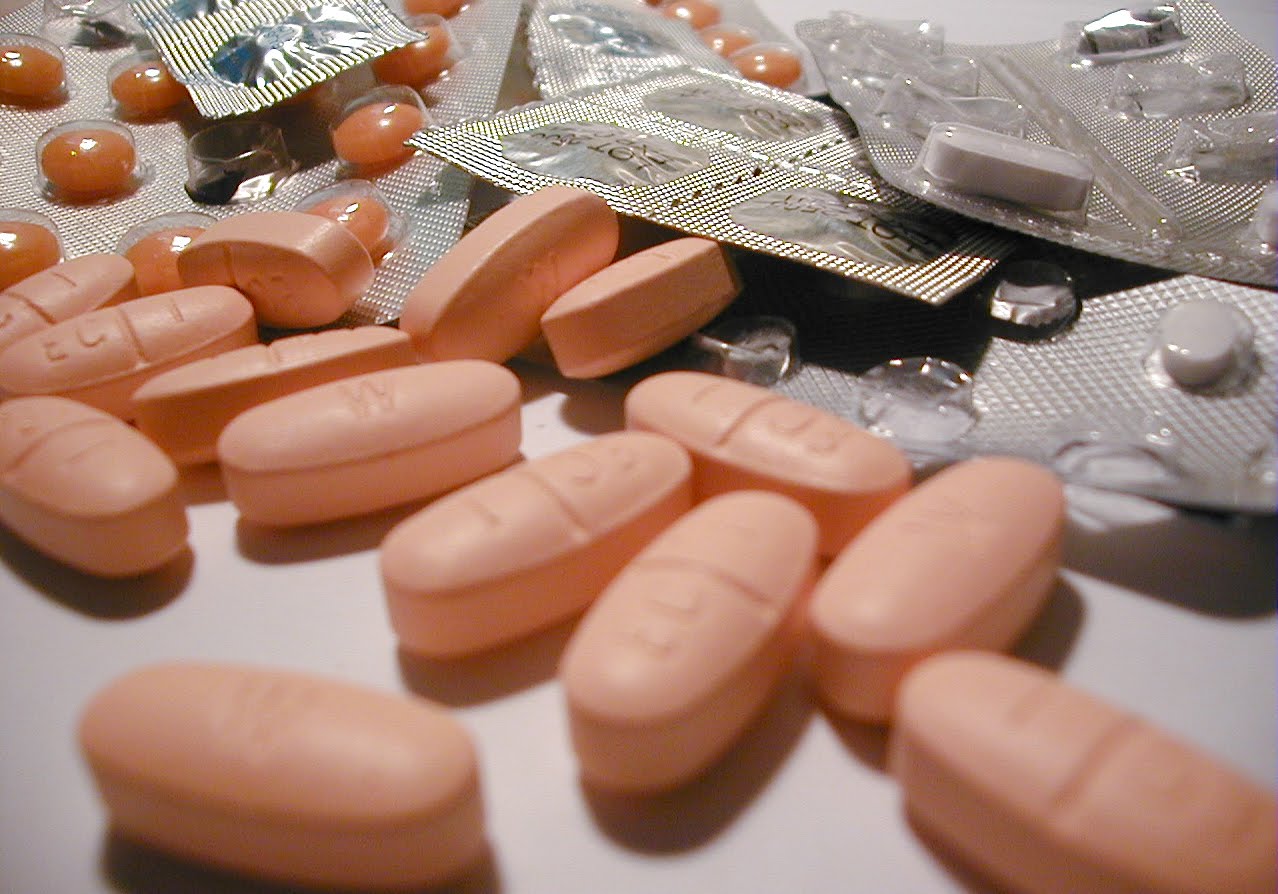
A Hard Pill To Swallow.Disillusionment can be a hard pill to swallow.

The president is being tarred and feathered over the Gulf oil spill: He's either doing too little, or too much.

The Brits are up in arms because they see President Obama as being too passionate, unfairly attacking their favorite-son company, British Petroleum.

Some in Parliament are urging the Prime Minister to scold our president, to tell him to put a sock in it. If British Petroleum was an American company called U.S. Petroleum, and the English coastline was the first line of defense against an oil spill of the magnitude we're experience here, I don't think that our congress would be urging our president to tell the Brits to tone it down. Further, I don't think that the American people would be jingoistically attacking the Brits, just because an American company was single-handedly destroying their fragile coastline.

I could be wrong, but I don't think so.

Ironically, the president, here at home, is seen as too dispassionate over the oil spill. He's not showing enough emotions .

Many pundits see this oil spill disaster as part and parcel of a Bush-Cheney oil policy, their cavorting with Big Oil, a frolicking that President Obama was more than willing to join--although in a limited fashion--an acquiescence to offshore drilling, coming a mere few weeks prior to this oil-spill disaster, now calculated as the worse in our nation's history.

President Obama's presidency will be judged as much by his cleaning up the mess that Bush-Cheny-Republicans had a hand in making--two wars, torture, Gitmo, Abu Ghraib, Iran's nuclear bomb ambitions, a faltering energy policy, an economy teetering on a depression, a deteriorating national image around the world--as by his cleaning up of another mess, the Gulf oil spill that's threatening livelihoods, a fragile ecosystem, and is poised to be put additional strain on an economy already struggling to rebound.

Along with the tar balls rolling up on coastal beaches, we're now seeing an all too familiar picture of the damage to wildlife that and oil spill can produce--our fine-feathered friends drenched in the sticky goo that's preventing flight, restraining movement, and destroying their natural food source.

Figuratively tarred and feathered, the president is fighting the political fight of his life, as he takes full responsibility for this oil-spill disaster--and it's becoming clearer, that there's little that he and congress can do, but appoint a commission, and hold hearings.

But the tarring and feathering doesn't end there. A recent article, by Dorothy Rabinowitz, for the Wall Street Journal, is casting the president as not quintessentially American--going so far as to calling him an "alien," one who is "wanting in certain qualities citizens have until now taken for granted in their presidents. Namely, a tone and presence that said: This is the Americans' leader, a man of them, for them, the nation's voice and champion."

Frankly, blacks have always been seen by most in the majority as "alien," and not quintessentially American. Americanness was peculiar to whites, and not even native Americans could share in that Americanness, a sense and presence that came into existence upon the formation of this nation, but were seen as something to be dealt with, something to be cast out, or thrown away.

Because, I, to this day, after living in this country all my life, continue to feel outside of the American mainstream, in exile, as it were, I don't fly the American flag, and only say that part of the Pledge of Allegiance that I feel is relevant, and leave out the other. Lest you see me as not patriotic, let me disavow you of that notion--because you'd be sorely mistaken.

I'm ultra-patriotic, a true son of this Republic. I believe in the Constitution, perhaps more than those who do wave their flags, and give lip-service to their allegiance. I believe in "liberty and justice for all." I believe in the American Dream, the dream that the founding fathers dared dream, when they formed this country, and declared their independence from England and the Crown, with these words:

"We hold these Truths to be self-evident, that all Men are created equal, that they are endowed by their Creator with certain unalienable Rights, that among these are Life, Liberty and the pursuit of Happiness."

Yet, how many times have we seen red-blooded Americans, so-called "real patriots," and true Americans, flout these "unalienable Rights"?

These were the things I used to believe that America stood for. I don't anymore. And although for many years I was deprived of these things, and because of that deprivation prized them more, I've learned that these Rights aren't the things that this country value most, not at the heart of her, not deep within her bosom, the locus where patriotic fervor live, flourish and flow, where the heart and soul of this country reside, within a collective body, multiracial, multicolored--with many colored plumes of cultures representing most of the cultures of the world.

I say, I used to think so. But not anymore.

Whether we all did once, I can't say. But here's what I can say:

At some point we lost our way. We began to put money ahead of everything--our conscience, our integrity, and our American values of "liberty and justice for all." And to add insult to injury, we used the people's money to bail out wall street. We learned later, that certain financial institutions had become too big to fail, and that their failure would have brought down the whole economy; at least that's what we were told, and I've no reason to believe otherwise. What we got in return was something called TARP. TARP sounds a lot like the word, "tar," those tar balls that waves are washing up on our Gulf coast beaches. TARP. Toxic (or Troubled) Assets Relief Program.

Let me ask you a question: Do you know what those toxic assets are? How forthcoming was our government in telling us what "relief" was provided with our money, and the nature of that relief? Here's a list of those companies that received TARP, and how much, but we still don't know the specifics: How many malls did we take possession of? How many office buildings, and where are they located?

We know why we did it (the bail out), and we know how and why we fell in this economic sinkhole we call a recession, but what is our Federal Government doing about it now, now that those toxic assets that blew up in its face much like the Deep-water Horizon, and toxic assets washed up upon our national shores, much like the oil in the Gulf?

Well, the fear is that congress won't do much about it at all. The problems that created the problem will be allowed to remain, much like the oil gushing in the Gulf and the carcasses of wildlife.

Follow the Financial Reform Bill here, U.S. Congress : Financial Reform Watch, as it works its way through the congress.

Just as BP had no real response to deal with a catastrophic explosion upon its deep-water platform, or know how to repair a blow-out preventer that failed, our congress is crafting an economic response that fails to address the problems that precipitated the economic crisis--a lack of transparency, too big to fail (this nation's six largest banks control assets equivalent to about 60 percent of our gross national product), and the derivative market (a shadow banking system valued at around 600 trillion dollars, an amount larger than the collective GNPs of all the world's nations, including our own).

Are you beginning to see a pattern here. We have a government colluding (by not regulating, or failing to regulate various industries) in order to keep business thriving, corporations sound, oil companies drilling, and coal companies digging, notwithstanding the cost to taxpayers, the ecosystem, or the toll in human lives.

It's not by happenstance that, in recent years, we've seen our august Supreme Court take a mostly pro-business, pro-corporation stance in its rulings, placing corporations either above the people, or on an equal footing with.

It's not by happenstance that lobbyists with the most influence on Capitol Hill are those with the most money--and, that too, spells corporations.

It's not by happenstance that congress repealed laws, and created new ones to enable the economic fleecing of America--and won't do what it takes to prevent another economic collapse, a collapse similar to the one that we're now witnessing.

It's not by happenstance that the oil-drilling moratorium established by President Obama has met with stiff resistance by effected businesses along the coast, and by their workers--those whose livelihoods depend on Gulf-oil drilling, deep-water or otherwise. So, as complaints pile up, and dwellers along the coast tear out their hair, and rend their clothes over this oil-spill disaster, others are ripping Obama for the moratorium. I've seen Catch-22s, but this has to be the pappy of them all.

It's not by happenstance that green energy projects are slow to take hold, and even slower to be embraced, when so many of us are dependent on the money that comes to us by way of the coal and oil industries.

Here's the thrust of it, the hard, but indisputable truth: Money, the pursuit of prosperity, as though it and happiness are one and the same, money, that green lubricant of industry--and I bet you thought it was American ingenuity--is the real oil that greases the wheels of our giant industrial machine, our vast industrial complex. Money greases the palms of congress. It greases the palms of just about everyone. And anything that prevents the flow of that money--moratoriums, for example--will meet with an untimely demise, whether it's drilling for oil, developing businesses that provide jobs, or supporting those governments you believe belong to you.

Money owns the government. Money calls the shots. Money makes the decisions, sets the agendas, establishes the policies, and enforces them. Money owns us. We dare not complain, or do what's necessary to stop the flow of that green stuff, or stop digging for it. We dare not regulate. We dare not pass laws that are too draconian, that actually address the problem, for fear that the problem will grow worse--and businesses, and corporations will fail, people will lose their jobs, capital will become scarce, governments will founder, and America will lose her greatness.

Disillusionment can be a hard pill to swallow.


Pill image courtesy of: Free Images - Free Stock Photos